Dementia is often associated with memory loss, but for many caregivers, the most challenging symptoms are behavioral changes like aggression, anxiety, irritability, wandering and sleep disturbances.


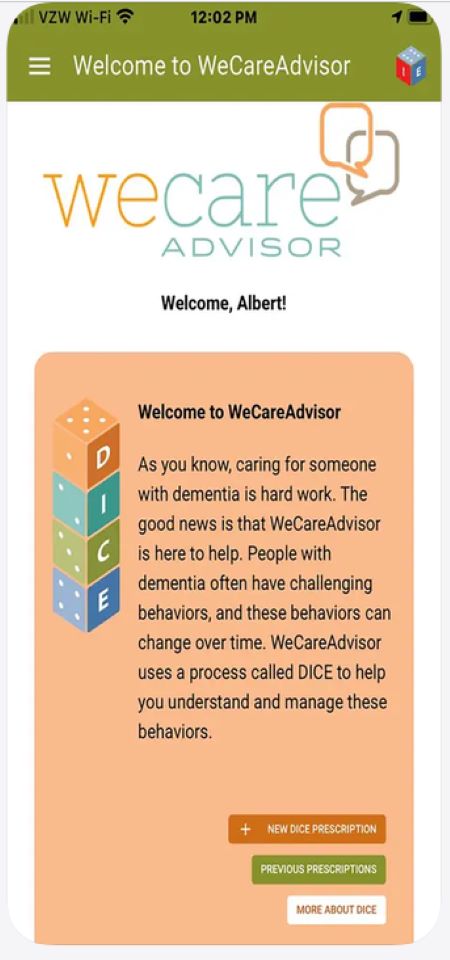
A new study from UC Davis Health and Drexel University found that WeCareAdvisor, an app designed to help caregivers manage dementia-related behavioral symptoms using practical, non-drug strategies, reduced caregiver distress and improved well-being.
The findings were published in the Journal of the American Geriatrics Society.
“This research shows that caregivers can use technology to learn and apply effective dementia care strategies,” said Helen Kales, Joe P. Tupin Professor of Psychiatry, chair of the UC Davis Department of Psychiatry and Behavioral Sciences and senior author of the study. “By giving caregivers the knowledge and confidence to address behavioral symptoms, we can improve quality of life for both caregivers and people living with dementia.”
More than 7 million people in the United States are living with Alzheimer’s, according to the Alzheimer’s Association. By 2050, the number is projected to rise to nearly 13 million.
Trial evaluated DICE Approach
The study is the first randomized trial to evaluate an app that gives caregivers a systematic, non-drug approach to manage dementia-related behavioral symptoms.
The application incorporates the DICE Approach (Describe, Investigate, Create, and Evaluate). Caregivers are guided through a series of questions to describe behaviors, investigate underlying causes, create individual strategies that don’t rely on medication, and then evaluate their effectiveness. During the study, caregivers received daily supportive tips via text messages. The app also contains educational materials.
The randomized, controlled trial compared two groups of participants — immediate users and delayed app users — who were the primary caregivers of a family member with dementia.
Participants were interviewed three times: At the beginning of the trial, one month into it and three months later. They evaluated the use of the app and its impact on caregiver distress and well-being, as well as the frequency and severity of behaviors of the person with dementia.