
A new study demonstrates that a person with severe paralysis caused by amyotrophic lateral sclerosis (ALS) can use a brain-computer interface (BCI) at home to communicate, work and interact with the digital world — without the need for researcher support. Published today in Nature Medicine, its results mark a significant step toward delivering practical, assistive technology for people with severe speech and motor impairments.
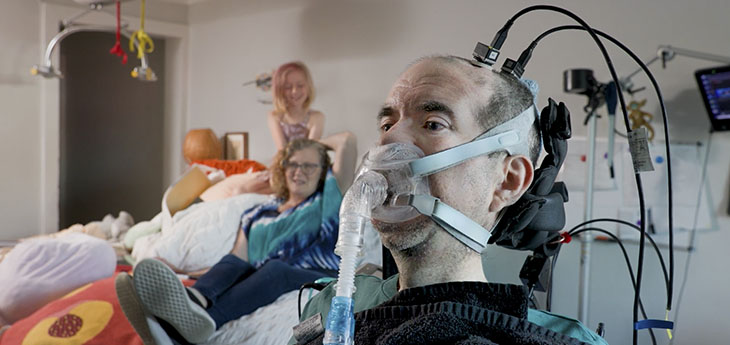
The BCI system was developed at UC Davis, in collaboration with colleagues at Brown University and Mass General Brigham Neuroscience Institute. It is equipped with advanced decoding algorithms that translate neural signals into text (speech BCI) and enable cursor control (movement BCI). It allows for full interaction with a personal computer.

The brain-computer interface is designed to restore communication and computer control by decoding neural activity linked to attempted speech and movement. Although recent advances have achieved high accuracy in research settings, real-world adoption has been limited by two key challenges: independent at-home use and reliable long-term performance.
The new BCI system overcomes both barriers. The study shows that it can now support rich, independent digital and in-person communication in real-world settings.
“For years, BCIs have been proof-of-concept devices that lived in highly controlled research labs. This work shows that we may have crossed a threshold, by empowering a person with paralysis to speak on his own terms,” said UC Davis neurosurgeon David Brandman. Brandman is the co-principal investigator and co-senior author of this study. He is an associate professor in the UC Davis Department of Neurological Surgery and co-director of the UC Davis Neuroprosthetics Lab.