Each spring, 48 states advance the clock an hour to observe daylight saving time. A new study led by UC Davis neurologist and sleep expert Sasikanth Gorantla shows that the change can lead to more migraines and less deep sleep in adults with migraines. The study was published in Journal of Clinical Sleep Medicine, the official journal of American Academy of Sleep Medicine.

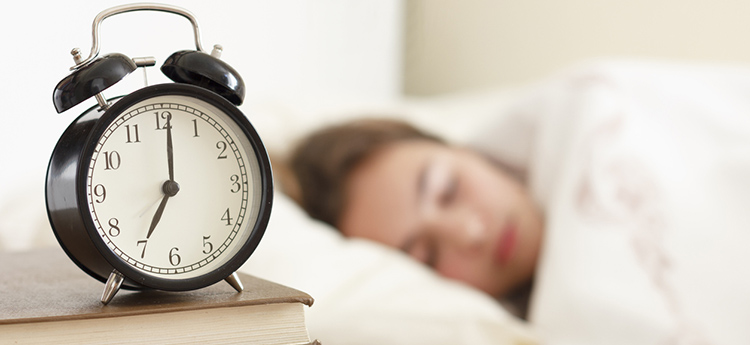
Clock transitions, especially Standard Time (ST) to Daylight Saving Time (DST) — as we are going to experience this weekend — can impair quality of sleep.
“We know that clock transitions are not good for brain health. But the exact impact was understudied — especially when it comes to how it affects headaches and migraines,” Gorantla said. “Our team wanted to find out the immediate effects of clock transitions for adults with migraine.”
Migraine
Migraine is a neurological disorder that affects more than 35 million people in the United States. It is the second leading cause of disability globally and affects more women than men.
People with migraine generally have a sensitive brain. A minor change in their sleep pattern may trigger a migraine. Common symptoms of migraines include nausea and vomiting, as well as light, sound and odor sensitivity.

Tracking headaches and migraines
The researchers followed 22 women and one man with episodic migraines for four weeks — two weeks before and two weeks after the spring clock change of March 12, 2023. The participants tracked their headaches in a diary. They also used an under-mattress sleep sensor to monitor their sleep architecture — the breakdown of sleep into various cycles and stages.
The researchers defined migraine days as days on which the headache met at least two criteria: unilateral, pulsating, moderate to severe intensity and aggravated by routine physical activity. It would also be accompanied by symptoms such as nausea, vomiting, sound (phonophobia) or light (photophobia) sensitives. Headache days, on the other hand, were counted as days when the headache did not fulfill these criteria.

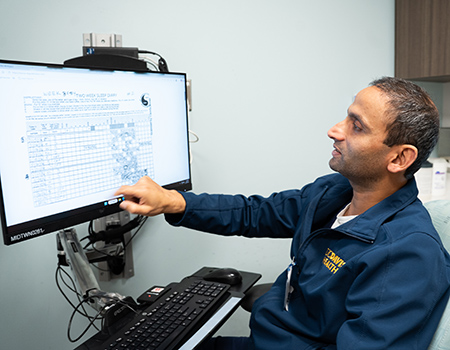
“Migraine headaches are often disabling and can impair daily functioning. Adults with migraines also experience non-migraine headaches that are characterized by mild, dull and achy pain,” Gorantla explained. “We instructed the study participants to document these distinct headaches in a diary during the study period. We also collected information on headache intensity and their baseline migraine preventative medications.”
The researchers excluded migraines that happened two days before and after the menstrual cycle. Hormonal fluctuations that occur during the cycle are known to trigger migraines.
Not all study participants reported 28 days of data. To account for these differences, the researchers computed the number of headache or migraine days per 100 person-day. They divided the number of headache or migraine days reported for each participant by the total days of observation for that participant. Then they multiplied the number by 100.
An hour change makes a difference
The study found that even a one-hour clock change disrupted the alignment of body’s internal clock and triggered more migraines
The study also has found that:
- Migraine frequency almost doubled after the time change. The number of migraine days rose from 7.76 to 13.35 per 100 person-days — a statistically significant jump.
- Headache and migraine intensities didn’t differ between before and after clock change.
- Deep sleep decreased. It dropped from an average of about 94 minutes per night before the time change to about 84 minutes afterward.
- Total sleep time remained about the same.
“Our findings show that even a small disruption to the body’s internal clock can have an impact on people living with migraines,” Gorantla said. “The increase in migraines and drop in deep sleep after the springtime change suggest that circadian stability is essential for migraine management.”
These results support growing evidence that clock changes can harm health, especially for those with conditions linked to sleep disruptions. These results can also be applied to other situations that disrupt circadian rhythms, such as jet lag and frequent travel across time zones.