
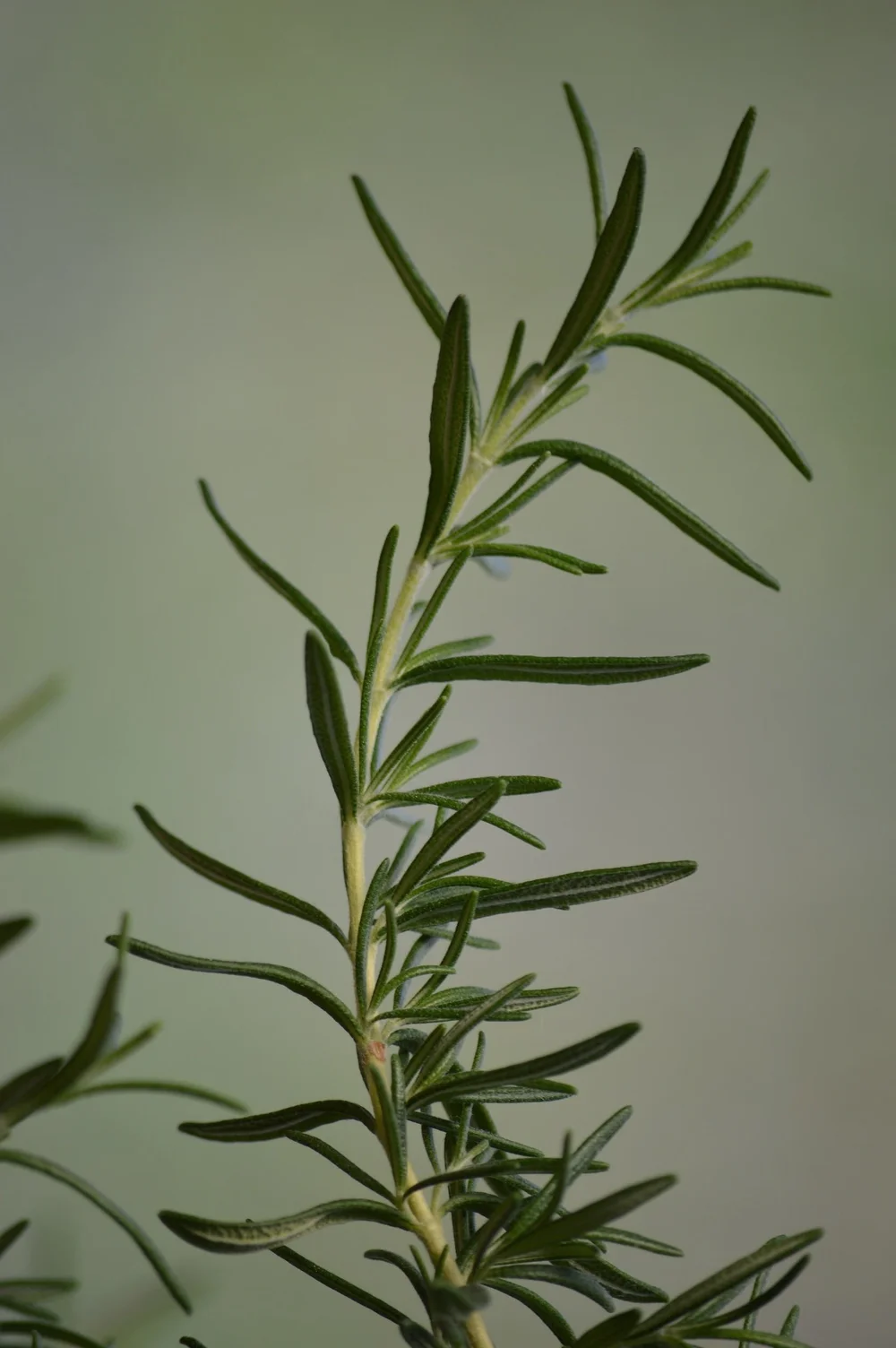
Here’s something that surprised even us: in a head-to-head clinical trial, rosemary oil performed comparably to minoxidil — one of the most widely used hair loss treatments on the market, for certain types of hair thinning.
That’s a big claim, and it deserves more than a TikTok trend to back it up.
So we’re breaking it down, what the research actually says, how rosemary oil works, who it’s most likely to help, and how to use it correctly. As hair loss specialists, we’ve been working with rosemary oil formulations for years. Here’s our honest take.
What Is Rosemary Oil?
Rosemary is a herb you’ve probably used in cooking, but it’s been used in medicine and skincare for centuries too. When it’s pressed into an essential oil, it becomes highly concentrated and contains compounds that have real, documented effects on the body.
In recent years, research has shown that these compounds can have meaningful benefits for scalp health: reducing inflammation, improving circulation, and supporting the environment your hair follicles need to grow.
What Does the Science Actually Say?
Let’s start with the study people keep referencing because it’s legitimate.
A clinical trial published in SKINmed Journal compared rosemary oil directly to 2% minoxidil, one of the most common over-the-counter hair loss treatments, in people with pattern hair loss (the most common type, affecting both men and women). After six months of consistent use, both groups showed similar increases in hair count.
The rosemary oil group also reported significantly less scalp itching compared to the minoxidil group, a common complaint with minoxidil.
THE BOTTOM LINE FROM RESEARCH
After 6 months, rosemary oil produced hair count results comparable to 2% minoxidil for pattern hair loss, with fewer scalp side effects. That’s a meaningful finding.
It’s worth being upfront about what this research doesn’t show: it compared rosemary oil to 2% minoxidil, not the stronger 5% version, and it focused on pattern hair loss specifically. It’s not a cure-all, and it won’t work the same way for every type of hair loss. But for what it studied, the results are genuinely encouraging.
Why Does Rosemary Oil Help Hair Grow?
Here’s the simple version of what’s happening when you apply rosemary oil to your scalp:
1. It Improves Blood Flow to Your Scalp
Rosemary oil helps open up the tiny blood vessels in your scalp, which means more blood, and with it, more oxygen and nutrients, reaches your hair follicles. Think of your follicles like plants: they need to be fed to grow. Poor scalp circulation is a real contributing factor in hair thinning, and this is one of the ways rosemary directly addresses it.
2. It Calms Scalp Inflammation
A lot of people dealing with hair loss also have an irritated or inflamed scalp, sometimes visibly, sometimes not. Inflammation around the follicle disrupts the hair growth cycle and can speed up shedding. Rosemary oil has strong anti-inflammatory properties that help calm this down and create a healthier environment for your hair to grow.
3. It Supports Follicle Recovery
Beyond circulation and inflammation, research suggests rosemary may help revive follicles that have slowed down, not dead follicles, but ones that have become sluggish or are producing thinner, weaker hairs. This is where most people notice the most visible change over time.
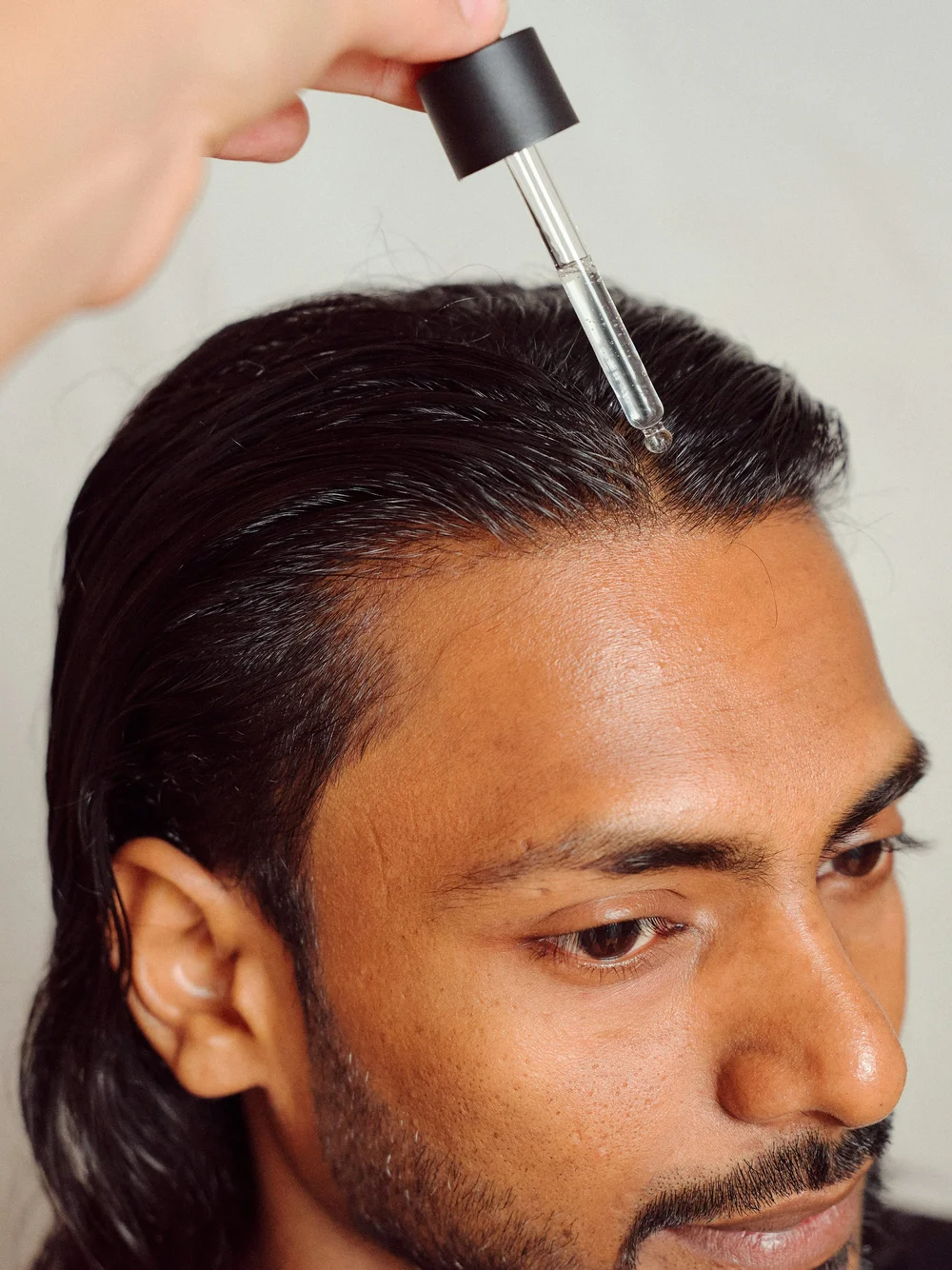

How to Actually Use It (and Get Results)
This is where a lot of people go wrong: buying rosemary oil and not using it correctly, then assuming it doesn’t work. How you use it matters.
Apply It to Your Scalp, Not Your Hair
Rosemary oil works at the follicle level, which means it needs to reach your scalp, not just sit on your hair. Apply it directly to the scalp and massage it in gently for a couple of minutes. That massage also helps stimulate circulation on its own, which compounds the benefit.
Don’t Apply Pure Essential Oil Directly
Pure rosemary essential oil is highly concentrated and can irritate your scalp if applied undiluted. Mix a few drops into a carrier oil like jojoba or coconut oil before applying, or use a professionally formulated product that already has the right concentration built in. At NHLMA, we recommend formulated products over DIY for this reason, the concentration is tested and consistent.
Use It Consistently — Results Take Time
The clinical trial used twice-daily application over six months. You don’t necessarily need to be that rigorous, but the key word is consistent. Most people who see results are using it daily or every other day for at least three months before they notice a meaningful difference. If you try it for two weeks and nothing happens, that’s expected, not a sign it isn’t working.
Combine It with Good Scalp Care
Rosemary oil works best when your scalp is actually clean and clear. If there’s buildup blocking your follicles, the oil can’t do its job as effectively. Pair it with the right shampoo for your scalp type, and you’ll get better results than using the oil alone.
Who Is It Most Likely to Help?
Rosemary oil tends to work best for:
-
People in the early stages of hair thinning, where follicles are still active but underperforming
-
Pattern hair loss (the type studied in the clinical research)
-
Hair loss with a scalp inflammation or irritation component
-
Anyone looking for a gentle, supportive addition to their existing hair care routine
-
People who want to be proactive about hair health, especially with a family history of thinning
A Realistic Expectation
Most people start to notice a difference (thicker strands, less shedding, improved scalp feel) somewhere between the 2 and 4 month mark. Visible regrowth, if it happens, typically shows up closer to 4-6 months. It’s a slow process, but a real one.
What Rosemary Oil Can’t Do
We want to be straight with you on this:
-
It’s very unlikely to regrow hair where the follicle has completely stopped functioning or there’s been scarring
-
It won’t address hair loss caused by a hormonal imbalance, nutritional deficiency, or autoimmune condition on its own because those root causes need to be treated directly
-
It’s not a replacement for prescription-strength treatments in more advanced cases of hair loss
The most important thing before starting any hair loss treatment, including rosemary oil, is understanding what’s actually causing your hair loss. Without that, you’re guessing. That’s what a scalp consultation and analysis are for.

What We Recommend at NHLMA
We’ve been incorporating rosemary oil into hair loss protocols for years, and what we see clinically lines up with the research. When the right product is used consistently and as part of a protocol that addresses your specific situation, it’s a genuinely useful tool.
If you’re not sure where to start, the best first step is getting a clear picture of what’s happening with your scalp and follicles. From there, we can tell you whether rosemary oil is the right fit, which formulation makes sense, and what else should be part of your approach.
Here’s how to get started:
-
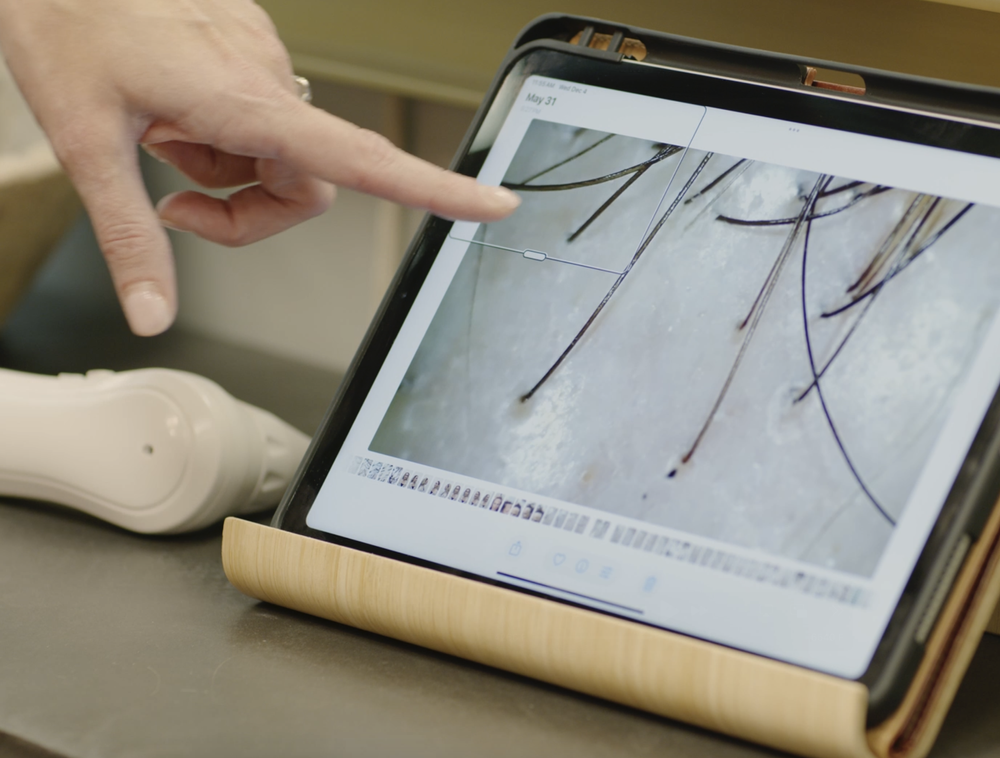
Complimentary Consultation — We take microscopic scalp photos so you can actually see the health of your follicles and get product recommendations specific to your hair loss.
-
Follicular Analysis — A detailed look at your scalp and follicle health to guide your full treatment plan.
-
Blood Lab Report & Consultation — Internal lab testing to catch any nutritional factors (like iron or vitamin D deficiency) that may be contributing to your hair loss, reviewed by our CNC Nutritionist.
NHLMA Patient 6 Month Before and After – She had an in-depth consultation, testing, medical grade laser, and scalp treatments to support her hair growth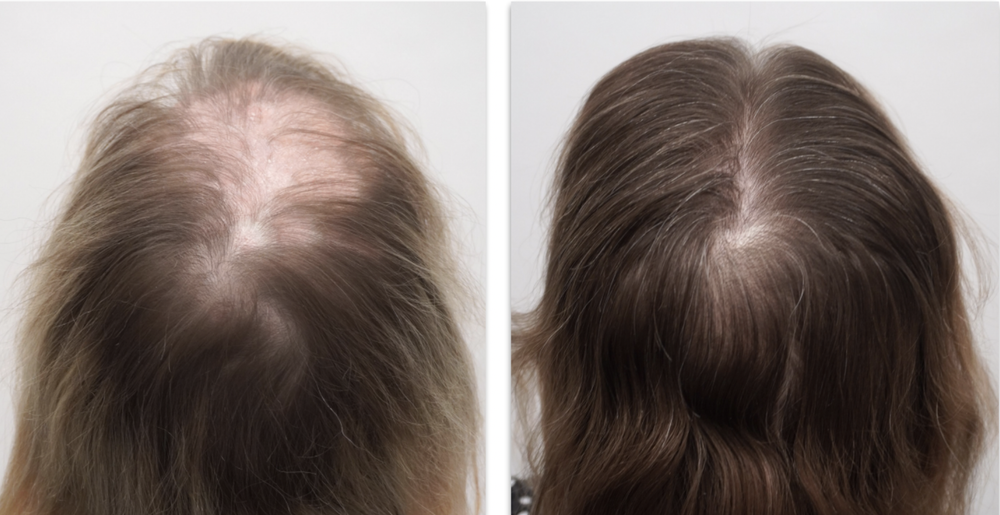



Questions We Hear All the Time
Does rosemary oil actually grow hair?
Yes, for certain types of hair loss, clinical research shows it can. A head-to-head trial with minoxidil found comparable results after 6 months for pattern hair loss. Results vary based on the type and stage of hair loss.
How long before I see results?
Give it at least 3 months of consistent use before evaluating. Most people notice a difference, less shedding, thicker strands, somewhere between 2 and 4 months. Visible regrowth is more of a 4–6 month milestone.
Is it as good as minoxidil?
For 2% minoxidil and pattern hair loss specifically, one well-designed study says yes, comparable results with fewer side effects. Minoxidil at higher concentrations has more research behind it overall, but rosemary oil is a legitimate alternative or complement.
Can it regrow hair I’ve already lost?
It works best on follicles that are still active but thinning, not ones that have completely stopped. A scalp analysis can tell you which category you’re in.
How do I apply it?
Apply to your scalp (not hair), massage gently for 2–3 minutes, and leave it in. Always dilute pure essential oil in a carrier oil first, or use a pre-formulated product with the correct concentration.
Any side effects?
At the right concentration, it’s very well-tolerated. The clinical trial actually found fewer side effects than minoxidil. Undiluted essential oil applied directly can irritate the scalp, which is why formulated products are a safer bet.
Can I use it alongside other treatments?
Generally yes, it works well as part of a broader protocol. If you’re on prescription treatments, check with your specialist just to be sure.
Not sure where to start with your hair loss?
Book a complimentary virtual or in-person hair consultation, and our expert trichologists and hair specialists will take microscopic scalp photos and walk you through exactly what’s happening and what to do about it. No pressure, no guessing.