
When Jamie O’Neill opened his pharmacy bill and didn’t see a charge for his diabetes medication, he thought it had to be a mistake.
For years, the $350 drug charge had shown up every few months. O’Neill, a retired community college English professor living in Sacramento, had even stopped taking the medication for a time because of the high cost.

“It’s outrageously expensive,” O’Neill, 82, complained.
Then one day, the charge for his Jardiance tablets simply disappeared.
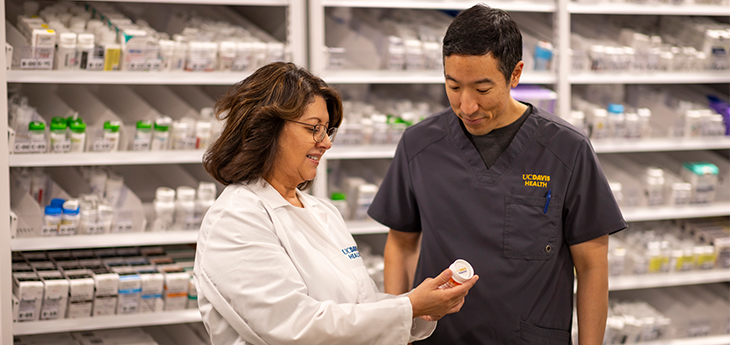
The savings came through UC Davis Health’s outpatient pharmacy, which enrolled him in a program that covered the entire cost. O’Neill is one of thousands of UC Davis Health patients — and millions across the country — who are benefiting from a little-known federal program called 340B. It allows hospitals and health centers to purchase medications at discounted rates. Hospitals then use the savings to cover medication costs for patients, such as O’Neill, who struggle to pay for expensive drugs.
O’Neill said he is grateful that UC Davis Health registered him for the discount program, and then he quipped, “because it reduces my sense of irritation, which I have for an old guy.”
How 340B supports UC Davis patients and the community
The 340B program was created by Congress in 1992. It requires pharmaceutical companies to sell outpatient drugs at a discount to safety-net hospitals, such as UC Davis Medical Center, which serve a lot of uninsured and government-insured patients. The hospitals qualify for the program because they typically lose money when providing high levels of care to individuals with low incomes.