
Future certified registered nurse anesthetists (CRNAs) at the Betty Irene Moore School of Nursing at UC Davis reached a turning point last week at a capping ceremony, a tradition that marks the move from the classroom to the surgical suite.
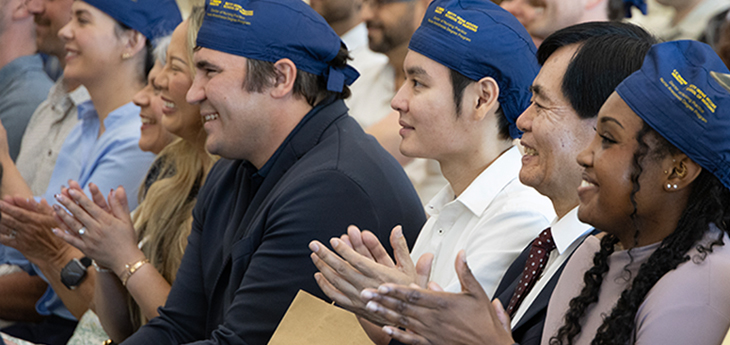
The event, where each student received a surgical cap, was a key step for the inaugural class in the Doctor of Nursing Practice — Nurse Anesthesia program. After months of coursework, the 16 students are now shifting into the clinical phase of their training. So far, they have taken advanced science courses and spent hours in simulation practicing airway management, regional anesthesia, anesthesia crisis management and simulation experiences.
But the surgical cap is only part of the story.
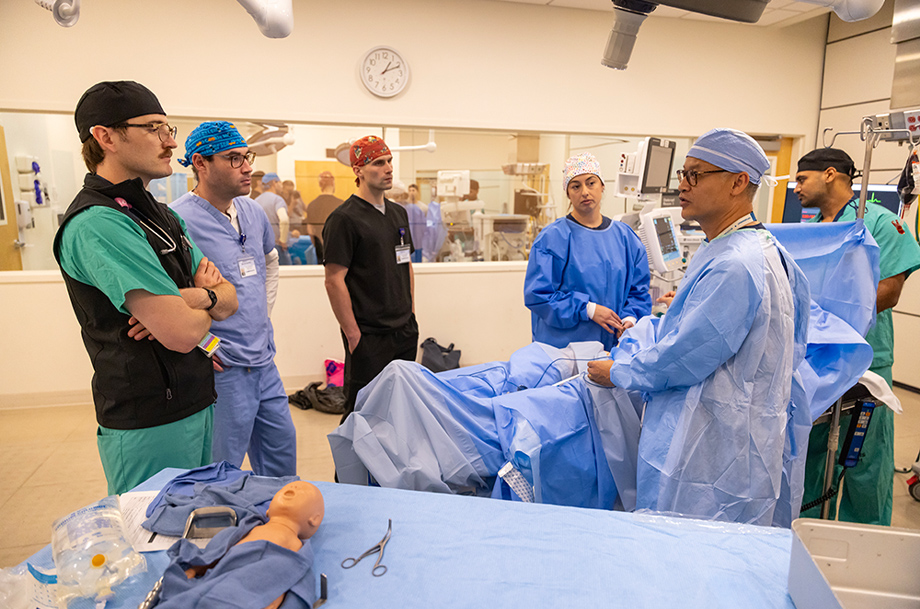
The students are in the first nurse anesthesia doctoral program in the University of California system and the sixth in California. The program has a clear goal: It was created to help meet a growing need for anesthesia care across the state.
California has nearly 40 million residents. As the population ages, more people will need surgery and other procedures that require anesthesia. The need for providers — whether anesthesiologists, anesthesiologist assistants or certified registered nurse anesthetists, known as CRNAs — is already growing faster than the supply. That gap could become much larger. By 2033, the nation could be short about 12,500 anesthesia providers.
UC Davis leaders say CRNAs — the professional role these graduates hope to attain — can help fill that gap. They are trained to provide safe anesthesia care in many settings. That includes areas where there are not enough doctors.
Preparing to serve California
The first UC Davis class includes students from Sacramento, the Bay Area, Ukiah, Fresno, Chico and San Diego. Program leaders say that range matters. It brings many views into the classroom and supports the school’s goal of serving the whole state.
The need for anesthesia care is also growing outside the traditional operating room. More procedures now take place in ambulatory surgical centers and other care settings. This includes the 48X Complex at UC Davis Health in Sacramento, one of the largest standalone ambulatory surgery centers in the country.
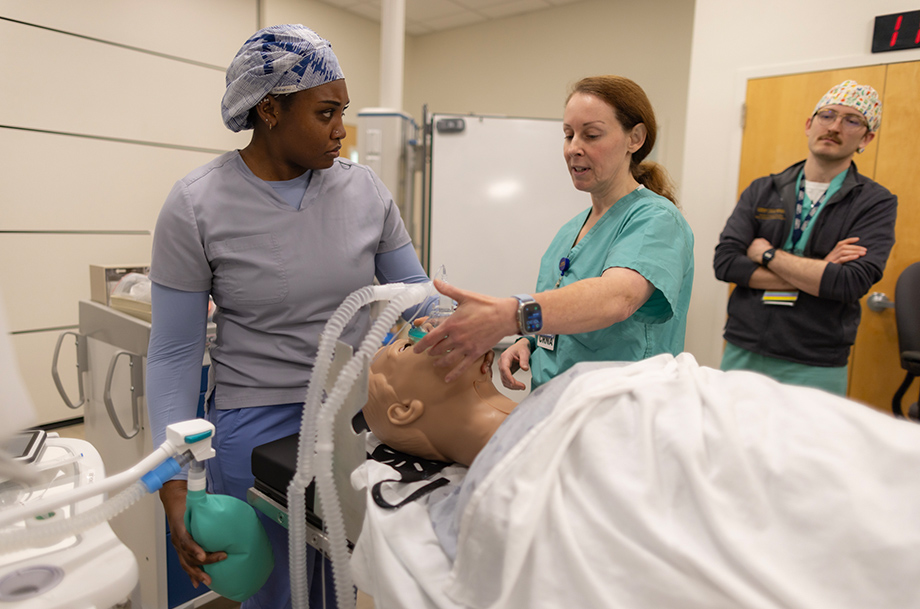
Nurse anesthetist doctoral Program Director Jakkarin “Jake” Sareerak reminded students at the capping ceremony that the next phase will require skill, focus and humility.
“Underneath all of those numbers is a person who has trusted you during one of the most vulnerable moments of their life,” Sareerak said. “For you, this may eventually become your third case of the day. For your patient, it may be one of the biggest days of their life.”
The first class builds the path
The ceremony also had special meaning because the inaugural class is setting the path for every UC Davis nurse anesthesia class that follows.
These 16 students entered with no alumni to call and no earlier class to show them what to expect. They are helping shape the program’s culture, standards and sense of community. At the same time, they are preparing for a field that demands skills, trust and sound judgment.
“Being part of the inaugural cohort carries a great deal of responsibility. We are helping establish the standard for the students who will follow us,” explained student Ray Lopez. “It is meaningful to know that our experiences will help shape a program that will educate future anesthesia providers for California.”
Dean Stephen Cavanagh echoed the fact that their role reaches well beyond campus.
“Our responsibility is not simply to prepare outstanding clinicians,” Cavanagh said. “It is to prepare a workforce capable of serving all of California.”
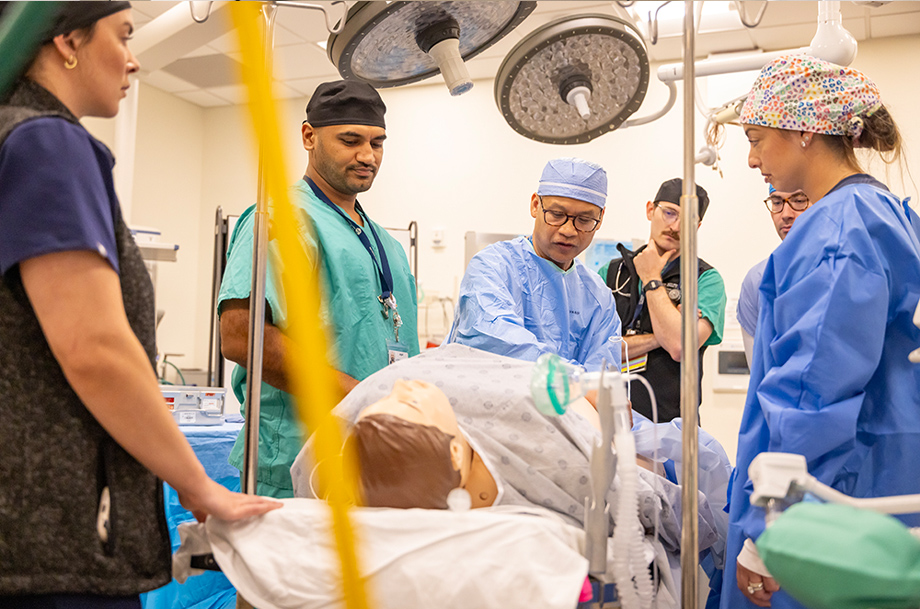
While the surgical cap symbolizes the start of a new phase of training, UC Davis marks the transition as a further step toward building the anesthesia workforce California will need for years to come.
“My goal is to bring the knowledge and experience gained at leading institutions to communities that may not otherwise have access to those resources,” Lopez added. “Regardless of location, every patient deserves the same safe, compassionate and excellent anesthesia care.”
The students will spend the next two years continuing coursework and clinical rotations at various UC Health campuses and other health systems across the United States, including Adventist Health Ukiah, Plumas District Hospital and Oak Valley Hospital in Oakdale. When they graduate in June 2028, they will have completed a scholarly project and a minimum of 2000 hours of clinical hours and will be prepared to sit for the National Certification Examination and become licensed Certified Registered Nurse Anesthetists.