
Crystal Perkins loves her boys. The noisy, energetic and occasionally messy reality of raising sons is an everyday part of her family’s household.
That’s why, when her fourth boy was due in 2018, she and her husband, JR, felt confident they knew what to expect.
But five weeks before Crystal’s delivery date, the couple went to an ultrasound appointment and got news they were not expecting to hear — Crystal’s amniotic fluid was low. The baby’s kidneys were “bright.” Doctors refer to this as echogenic kidneys, a finding in which the kidney tissue appears brighter or whiter than normal when compared with the liver. This increased brightness can signal a variety of kidney conditions and may indicate changes in the kidney tissue that require further evaluation.
“All the other pregnancies were really healthy,” Crystal said. “We were so surprised because we didn’t think anything was wrong.”
The couple was immediately sent to labor and delivery at a hospital near their Rancho Cordova home.
A rare genetic disorder: Autosomal recessive polycystic kidney disease
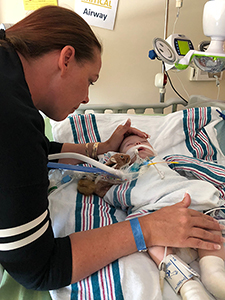
Jordy Perkins was born on April 29, 2018. Then came the diagnosis: auto recessive polycystic kidney disease (ARPKD), a rare genetic disorder that affects about one in 20,000 children.
Low amniotic fluid results in underdeveloped lungs, which causes major breathing issues in babies. The disease also leads to lifelong issues with kidney function … if the baby survives.
About 30 percent of newborns with ARPKD die within their first week.
The Perkins held onto hope that their son would make it.
Rushed to UC Davis Children’s Hospital
Jordy’s best chance, doctors said, was for an ambulance to take him to UC Davis Children’s Hospital, the only one in the area that could provide the level of care he required. UC Davis has the only nationally ranked pediatric nephrology program in the Sacramento region.
Jordy’s underlying kidney condition put him at high risk of developing progressive chronic kidney disease and, ultimately, dialysis or a transplant.