An inherited form of blindness directly comparable to a common inherited optic nerve disease in humans has been discovered in rhesus macaques at the California National Primate Research Center at the University of California, Davis. The work, published April 15 in Proceedings of the National Academy of Sciences, could lead to a better understanding of autosomal dominant optic atrophy, or ADOA, and potentially to new treatments.

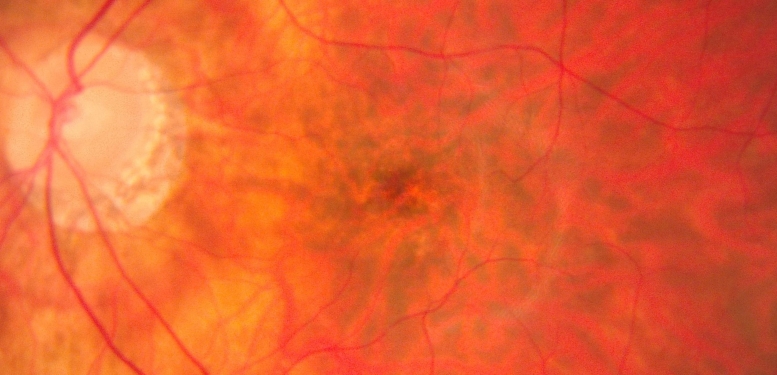
“ADOA affects about 3 in 100,000 people worldwide, causing progressive vision loss and eventual blindness. People with the disease develop blind spots, or scotomas, and there is no available treatment,” said Sara Thomasy, senior author on the paper. Thomasy is a professor of comparative ophthalmology and holds dual appointments at the Weill School of Veterinary Medicine and the Department of Ophthalmology and Vision Science at UC Davis. Many patients are diagnosed between the ages of 10 and 30, making it an important cause of vision loss in children.
In humans, ADOA is related to mutations in a gene called OPA1, which affects mitochondria. While mitochondria are found throughout the body, the long nerve axons that run from the retina to the brain are particularly vulnerable to mitochondrial defects.
Rhesus macaques and other non-human primates have a very similar eye structure and vision system to humans. Thomasy and colleagues found that some of the monkeys at the CNPRC had a spontaneous mutation in OPA1 that leads to changes in the eye very similar to those in people with ADOA.