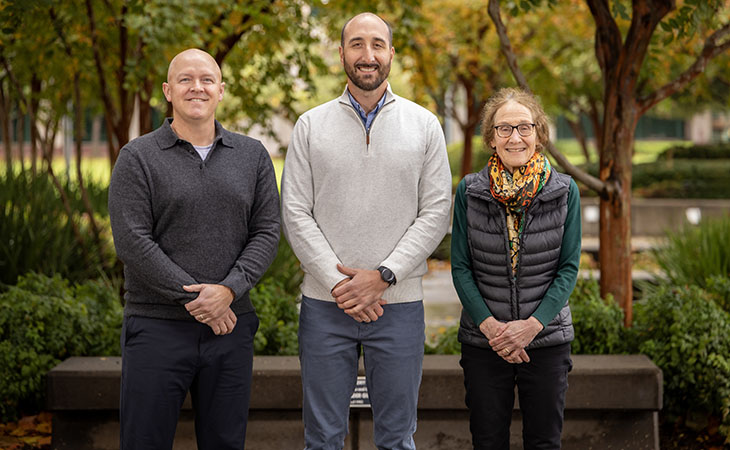
Thomas Ambrosi, assistant professor in the Department of Orthopaedic Surgery, has received a five-year, $3.7 million R01 grant from the National Institutes of Health to study a new way to repair cartilage damaged by osteoarthritis. Ambrosi, the principal investigator, will work with co-investigators J. Kent Leach, vice chair of research in orthopaedic surgery, and Nancy Lane, distinguished professor of medicine and rheumatology.


The project is funded by the National Institute on Aging. The team will study Growth factor-Enhanced Microfracture, or GEM, an approach that aims to activate the body’s own skeletal stem cells and guide them toward producing healthy cartilage.
Osteoarthritis affects about 33 million U.S. adults according to the Centers for Disease Control and Prevention. The disease gradually breaks down cartilage, the tissue that cushions joints and helps them move smoothly.
“Unlike many other tissues, damaged articular cartilage has very limited capacity to repair itself, contributing to chronic pain and loss of mobility, particularly in patients with osteoarthritis,” Ambrosi said. “It’s a major challenge in treating the disease, and why this new approach is so exciting.”

Harnessing the body’s own stem cells
Ambrosi and his team study skeletal stem cells, the body’s own repair cells for bone and cartilage. These cells can be activated by microfracture, a procedure in which surgeons make small holes into the bone beneath damaged cartilage to trigger healing.
The team’s earlier research found that after microfracture, GEM can guide these stem cells to form hyaline cartilage — the smooth, durable tissue that normally covers joint surfaces. GEM works by adjusting both the cells’ activity and their surrounding environment.
The approach has shown promising results in young animal studies but has been less effective in older mice. The new project will explore why aging limits the response and whether additional changes to the cellular environment can make GEM work in aged and osteoarthritic joints.

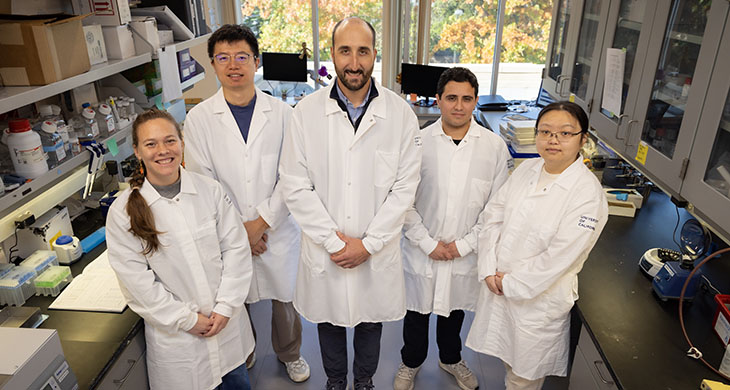
“Rather than introducing new cells or replacing damaged tissue, our goal is to overcome the barriers imposed by aging and disease by directing a patient’s own skeletal stem cells to regenerate healthy cartilage, ultimately helping people maintain mobility and quality of life,” Ambrosi said.
Leach notes that the project is an expansion of the leading-edge research already underway by the team to establish the power of skeletal stem cells in tissue regeneration.
“Dr. Ambrosi’s award will identify druggable targets to activate the body’s own cells within damaged tissue to regenerate cartilage. He approaches this project through the lens of aged and osteoarthritic disease states, which may reveal as yet unknown mechanisms to promote regeneration and restore quality of life,” Leach said.