
Introduction: The Growing Need for Smarter Fuel Efficiency
Rising fuel costs and increasing vehicle maintenance expenses have pushed drivers worldwide to search for smarter, more efficient solutions. Traditional fuel-saving methods—like careful acceleration or regular servicing—are helpful but often insufficient in today’s fast-paced driving environment.
This growing demand has led to the emergence of advanced automotive gadgets designed to optimize fuel usage. One such device gaining attention is the Optifuel Fuel Saver, a compact plug-in solution that claims to improve fuel efficiency and enhance engine performance without requiring mechanical expertise.
This article provides a comprehensive, detailed, and balanced overview of the Optifuel Fuel Saver—covering how it works, its features, benefits, installation, user experiences, and important considerations before purchasing.
What Is Optifuel Fuel Saver?
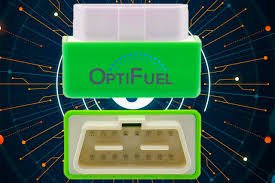
The Optifuel Fuel Saver is a small electronic device designed to plug directly into a vehicle’s OBD2 (On-Board Diagnostics) port. It aims to optimize fuel consumption by communicating with the car’s engine control unit (ECU).
According to available product descriptions, the device works by analyzing driving patterns and adjusting parameters such as fuel-air mixture, ignition timing, and throttle response to improve efficiency.
Unlike traditional mechanical modifications, this device is marketed as a non-invasive, plug-and-play solution that does not require tools or technical skills.
How Optifuel Fuel Saver Works
The core concept behind the Optifuel Fuel Saver revolves around ECU optimization. The ECU is essentially the “brain” of a modern vehicle, controlling engine performance and fuel usage.
Key Working Mechanism:
- Data Collection Phase
After installation, the device monitors driving behavior over a period (often around 100–150 miles). - Adaptive Learning
It analyzes patterns such as acceleration, braking, and fuel consumption. - Optimization Process
Based on collected data, it adjusts fuel delivery and combustion timing. - Continuous Adjustment
The device continues refining performance over time for improved efficiency.
This adaptive approach is what sets such devices apart from static fuel-saving gadgets.
Key Features of Optifuel Fuel Saver
1. Plug-and-Play Installation
No tools or professional assistance are required. Simply plug the device into the OBD2 port and start driving.
2. ECU Communication
The device interacts with the vehicle’s onboard computer system to optimize performance parameters.
3. Adaptive Technology
It learns from real-world driving habits and adjusts settings accordingly.
4. Wide Compatibility
Compatible with most petrol vehicles manufactured after 1996 that include an OBD2 port.
5. Non-Invasive Design
It does not permanently alter engine settings or void warranties.
Benefits of Using Optifuel Fuel Saver
Improved Fuel Efficiency
The primary goal is to reduce fuel consumption by optimizing combustion and reducing waste.
Enhanced Engine Performance
Users may notice smoother acceleration and improved responsiveness.
Reduced Emissions
Better fuel combustion can contribute to lower exhaust emissions.
Cost Savings Over Time
Even modest improvements in fuel efficiency can lead to significant long-term savings.
Easy Maintenance
No maintenance, updates, or ongoing adjustments are typically required.
Real-World Performance: What Users Report
User experiences with Optifuel Fuel Saver vary widely.
Positive Feedback:
- Some users report noticeable improvements in fuel efficiency.
- Others highlight smoother driving performance.
- Ease of installation is frequently praised.
Mixed Opinions:
- Results differ depending on vehicle type, driving habits, and conditions.
- Some users report only minor improvements.
Critical Views:
- Experts and reviewers question the scientific effectiveness of such devices.
- Some sources suggest results may be inconsistent or negligible.
Important Consideration: Do Fuel Saver Devices Really Work?
Fuel-saving devices have existed for decades, and many have been tested by independent organizations.
Studies show that many aftermarket fuel-saving gadgets do not deliver measurable improvements in fuel efficiency.
Additionally:
- Claims of extremely high fuel savings are often unrealistic.
- Actual performance gains, if any, tend to be modest.
This does not necessarily mean all devices are ineffective, but it highlights the importance of realistic expectations.
Installation Guide
Installing the Optifuel Fuel Saver is simple and typically involves the following steps:
- Locate the OBD2 port (usually under the dashboard).
- Plug the device into the port.
- Turn on the ignition.
- Drive normally to allow the device to calibrate.
No additional setup or configuration is required.
Who Should Consider Optifuel Fuel Saver?
This device may be suitable for:
- Daily commuters seeking better mileage
- Long-distance drivers
- Budget-conscious vehicle owners
- Individuals looking for easy, non-mechanical solutions
- Drivers interested in reducing emissions
Who Might Not Benefit?
- Drivers expecting dramatic fuel savings
- Owners of non-compatible vehicles (diesel, hybrid, or electric)
- Those seeking guaranteed performance improvements
Pros and Cons
Pros:
- Easy to install and use
- No technical knowledge required
- Non-invasive and removable
- Potential fuel savings
- Compatible with many vehicles
Cons:
- Results may vary significantly
- Limited scientific validation
- Not effective for all vehicles
- Claims may be exaggerated
Comparison with Traditional Fuel-Saving Methods
| Method | Effectiveness | Effort Required |
|---|---|---|
| Driving habits | High | Medium |
| Regular maintenance | High | Medium |
| Tire pressure optimization | Moderate | Low |
| Fuel saver devices | Variable | Low |
While devices like Optifuel offer convenience, traditional methods remain more consistently reliable.
Safety and Compatibility
The device is designed to be safe for use with standard vehicles and does not permanently modify engine settings.
However:
- Always ensure compatibility with your vehicle
- Avoid using multiple similar devices simultaneously
- Monitor performance after installation
Pricing and Availability
The Optifuel Fuel Saver is typically available through official online platforms and promotional landing pages.
Pricing may vary depending on discounts, bundles, and seasonal offers.
Frequently Asked Questions
Does Optifuel Fuel Saver really work?
It may provide modest improvements, but results vary widely.
Is it safe for my car?
Yes, it is designed as a non-invasive device.
How long before results appear?
Usually after a calibration period of regular driving.
Will it void my warranty?
Generally no, since it does not alter factory settings.
Is it suitable for all vehicles?
Only for OBD2-compatible petrol vehicles.
Final Verdict
The Optifuel Fuel Saver represents a modern attempt to improve fuel efficiency using plug-and-play technology. It offers convenience, ease of use, and the potential for modest fuel savings.
However, expectations should remain realistic. While some users report benefits, others experience minimal or no change. Scientific evidence supporting significant improvements remains limited.
For those seeking a simple, low-effort solution, it may be worth trying—especially when combined with good driving habits and proper vehicle maintenance.
Conclusion
Fuel efficiency remains a major concern for drivers, and innovative solutions like the Optifuel Fuel Saver continue to attract attention.
While it presents an appealing concept—smart optimization without mechanical changes—its effectiveness depends on multiple factors, including vehicle type, driving behavior, and expectations.
Ultimately, the best approach to fuel savings combines technology, responsible driving, and regular vehicle care.