
Two new studies from the UC Davis MIND Institute examined regulatory T cells (Tregs) and their potential role in neuroinflammation and behavioral changes associated with autism.

Tregs act as immune system “brakes,” calming inflammation to prevent overreaction. They are often decreased in autistic individuals.
Previous studies have found higher levels of inflammatory immune cells in the blood, brain and gastrointestinal tissues of people with autism. These increased inflammatory responses are often linked to greater behavioral support needs, while higher levels of Tregs are associated with improved behavioral outcomes. Despite this, Tregs have not been well studied in autistic children, and their potential as a therapeutic target remains largely unexplored.
Altered Tregs in autistic children
The first study, published in the Journal of Neuroinflammation, characterized Tregs in children with autism. It determined if gastrointestinal (GI) issues, a common co-occurring condition, altered Tregs in a unique way.
The researchers found autistic children had altered Tregs both in number and in the genes those cells use. This was compared to typically developing children. All participants were enrolled in the CHARGE study (Childhood Autism Risk from Genetics and Environment), an ongoing study that supports autism research.
The researchers compared the number and type of Tregs in 36 children with autism and 18 typically developing children. They also examined gene expression in Tregs to determine if there were differences between the two groups. In addition, they looked at the relationship between Tregs and gastrointestinal symptoms in autistic children.
The researchers found children with autism showed altered Tregs. Compared to typically developing children, children with autism had:
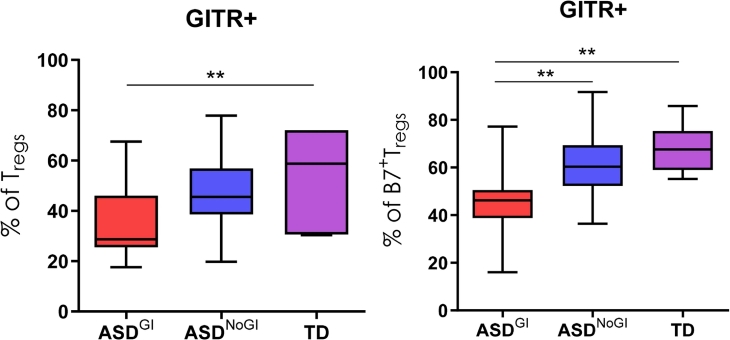
- A lower number of Tregs. Tregs were generally reduced in autistic children but decreases in specific Treg populations differed depending on whether a child had GI issues. Children with autism and GI issues had fewer Tregs capable of producing anti-inflammatory proteins. Children without GI issues had fewer Tregs capable of dividing after activation.
- Differentially expressed genes. Tregs from autistic children had 213 differentially expressed genes, with 171 upregulated (increased output) and 42 downregulated (decreased output).
The upregulated genes mainly help cells reorganize and repair DNA and adjust how they manage energy and fat metabolism. The downregulated genes were mostly involved in energy production, such as the conversion of oxygen and nutrients into usable energy.
The researchers note that more research is needed, but that these changes in metabolism and DNA organization suggest the identity of Tregs is unstable. One commonality was that having fewer Tregs was associated with more challenging behaviors in both typically developing children and children with autism.
“These differences in Treg populations may help explain the higher levels of inflammation seen in autism and could be linked to both gastrointestinal problems and certain behavioral traits,” said Rachel Moreno, a postdoctoral fellow at the MIND Institute and first author of the study. “This data further supports the idea that the immune system plays an important role in autism in at least some individuals.”
Exploring Tregs as potential biological therapies
There is growing interest in biological therapies for autism that target Tregs.
In a second study, also published in the Journal of Neuroinflammation, the authors assessed whether increasing Tregs could reduce inflammation and behavioral challenges.
They used a mouse model of altered neurodevelopment, maternal immune activation (MIA), in which offspring exhibit autism-like behaviors.
The team transferred Tregs from healthy mice into male and female MIA mice, and evaluated tissues commonly inflamed in autism, including blood, brain and gut.
They found significant sex differences in the MIA mouse offspring that received the Treg transfer, with males showing greater changes than females.